
Observation drawing teaches students to slow down and notice what is actually in front of them. Instead of drawing a symbol of an apple, cup or hand, the artist studies its particular shape, angle, shadow and proportion.
Begin With the Largest Shapes
Place one simple object under a lamp. Before adding details, lightly mark its height and width. Ask: Is it taller than it is wide? Where is its widest point? Which direction does it lean?
Breaking an object into circles, rectangles and angled lines helps beginners organize the page without becoming overwhelmed.
Look at the Empty Space
Negative space is the area around an object. A student drawing a chair may find the shapes between its legs easier to compare than the legs themselves. Checking these empty shapes often corrects proportion naturally.
Use Light and Shadow to Show Form
Choose one clear light source and identify the lightest area, darkest area and cast shadow. Beginners do not need dozens of tones. Three simple values—light, middle and dark—can already make a flat outline feel three-dimensional.
Why Drawing From Life Feels Difficult
The eyes move constantly, while the page stays still. Students also tend to draw what they believe an object should look like. Short exercises help the brain compare angles and distances more accurately. Mistakes are part of learning to see.
Building Skills in Class
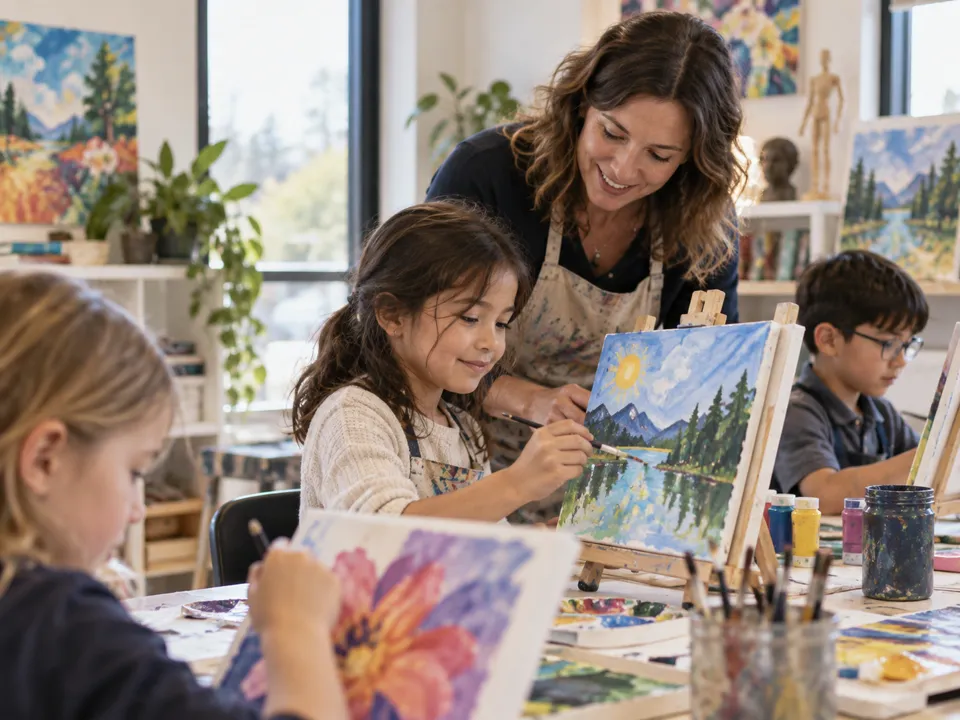
OPSMA’s art classes in Mississauga introduce children age 5 and older to drawing, painting and mixed media. Guided projects balance technical instruction with room for individual choices and creativity.