
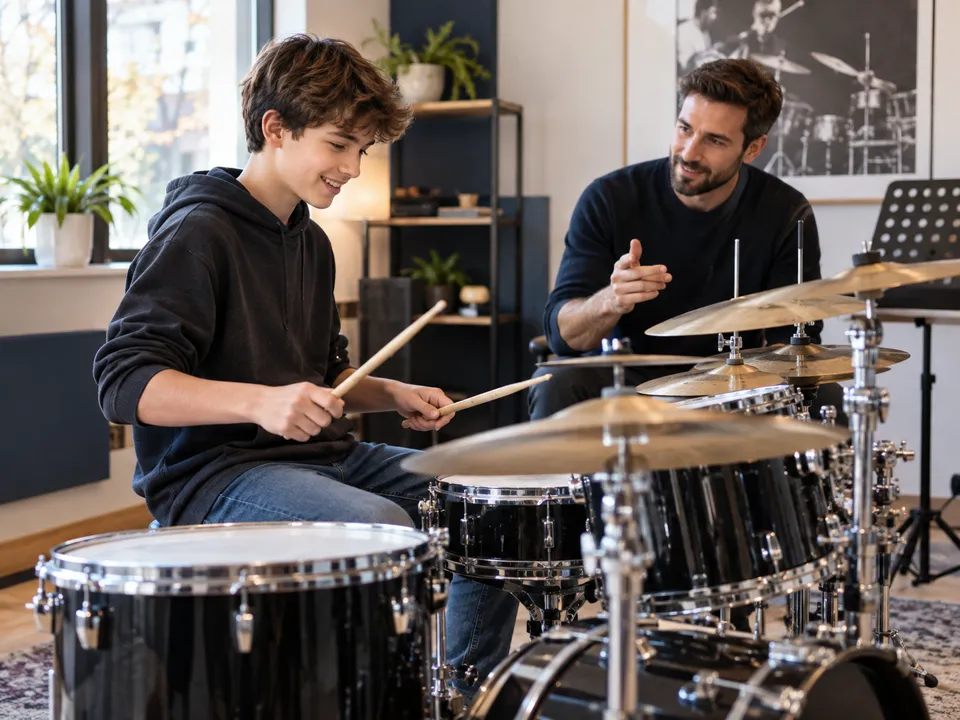
A full kit is useful, but it is not required for every practice session. Timing, stick control, reading and coordination can all improve through quiet exercises that fit into a bedroom or apartment.
Use a Practice Pad
A rubber practice pad gives sticks a controlled rebound while producing far less sound than a snare drum. Beginners can practise alternating strokes—right, left, right, left—while keeping both hands at a similar height and volume.
Start slowly with a metronome. Four clean strokes at 60 beats per minute build more control than a fast pattern that changes tempo.
Turn Rhythm Into Movement
Clap a written rhythm before playing it. Then tap the hands on the thighs while the feet alternate on the floor. This separates the rhythm from the equipment and trains the student to feel the pulse internally.
A five-minute coordination drill
- Count “1, 2, 3, 4” evenly.
- Tap both hands on beats 2 and 4.
- Keep the right foot moving on all four beats.
- Add the left foot on beats 1 and 3.
Practise Reading Away From the Kit
Drum notation can be read at a table. Point to each note while counting aloud, then tap the rhythm with pencils or hands. This is especially helpful when a new pattern feels confusing behind the kit.
What Still Requires a Drum Set?
Balance across cymbals and drums, pedal response, sound control and moving around the kit need real equipment. Quiet practice supports those skills; it does not replace them. Regular private drum lessons in Mississauga give students time on a properly arranged kit and clear assignments for home.